 BR21
Whoever opens wins the trade. Your aim settles while you move, and the shot leaves the instant the target is there — not a frame later.
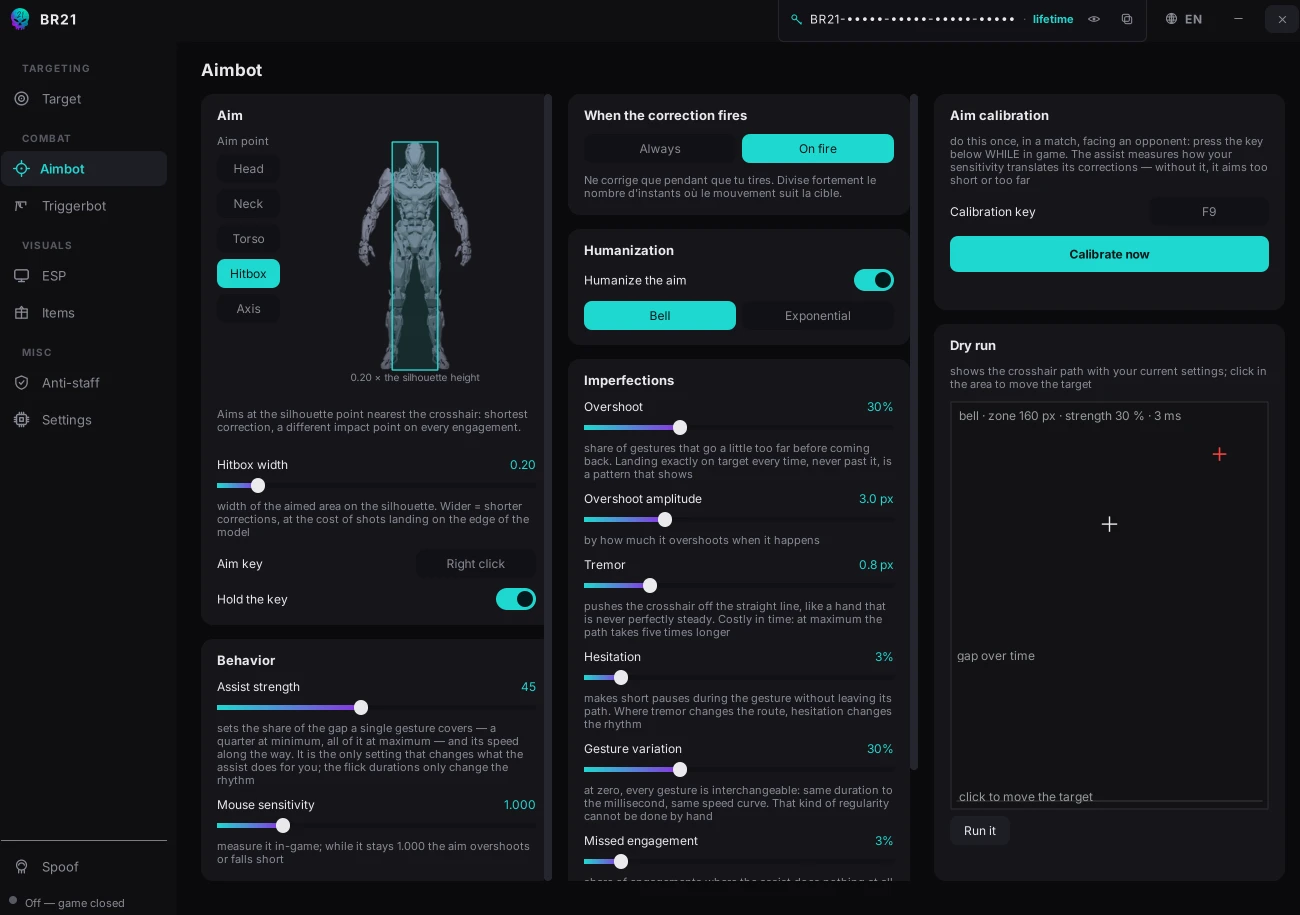
Nothing is a straight line. The aim overshoots a little, comes back, and never lands twice the same way — so from the outside it reads as a player who simply aims well. Preview the exact path before you ever fire a shot.
Nothing is forced on you: choose the aim point, how insistent the correction is, and how far it reaches. A setting that is too strong gets noticed — finding yours is the point.
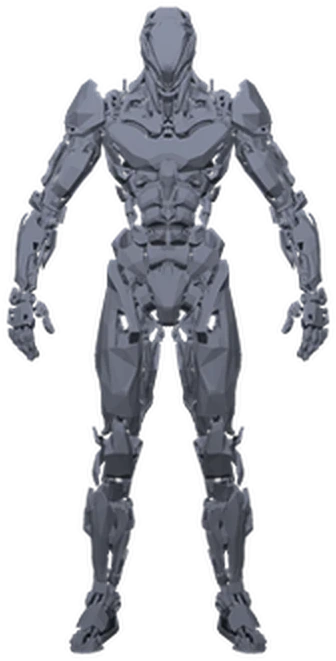
When the target crosses your crosshair, the round has already gone — human reaction time removed. It fires on the body's real skeleton, at your weapon's fire rate, and misses now and then on purpose.
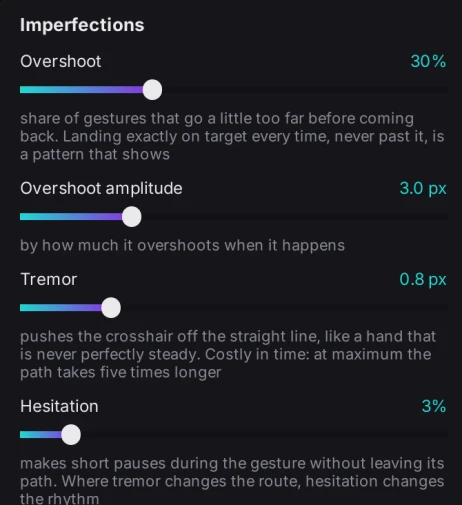
This is the part that keeps you playing. Overshoot, tremor, hesitation and gesture variation are tuned so the aim never moves on a rail — it lands a little differently every time. Server-side, your movements read like a real player, so there is no obvious pattern to flag.
Each solves half the problem. The duel is always lost on the other half.
You are lined up, perfectly. Now you have to pull — and that is exactly where your hand's 200 milliseconds cost you the trade.
The shot is perfect, to the frame. You still need the target to walk across your crosshair on its own.
Alignment and the opening in one motion. There is no half left dragging: you shoot first, every time.
Setup help, release notes and the install guide. One official invite — and how to spot the fakes.
Every plan includes the aimbot, the triggerbot and the ESP. Paid in USDC, no card.
Spoof key: 10 USDC add-on — needs an active licence.
No. Your hand starts the movement: as long as you are not heading toward the target, nothing kicks in. The assistance slides into your motion to finish setting it. You choose its strength, from a light nudge to a firm correction.
The aimbot brings you onto the target, the triggerbot pulls at the right moment. One solves alignment, the other solves reaction time. Apart they help; together they close the fight.
The movements are irregular, the way a hand is: they overshoot a little, come back, and never land twice the same way. From the outside — on a clip, or in spectator — it reads as a player who aims well.
Yes. The firing rhythm follows the weapon you are holding, from single shots to bursts. You can also limit the assistance to certain situations: only while you aim, or only with the weapon raised.
Yes. Each configuration goes into a profile you find again on the next launch. You can keep several — one per weapon, one per playstyle — and switch between them in one click.